Recently, Phase 2 of the China Beijing-Hangzhou Grand Canal Museum (provisional name), built by CSCEC, passed final acceptance, adding a new landmark to the Grand Canal National Cultural Park.
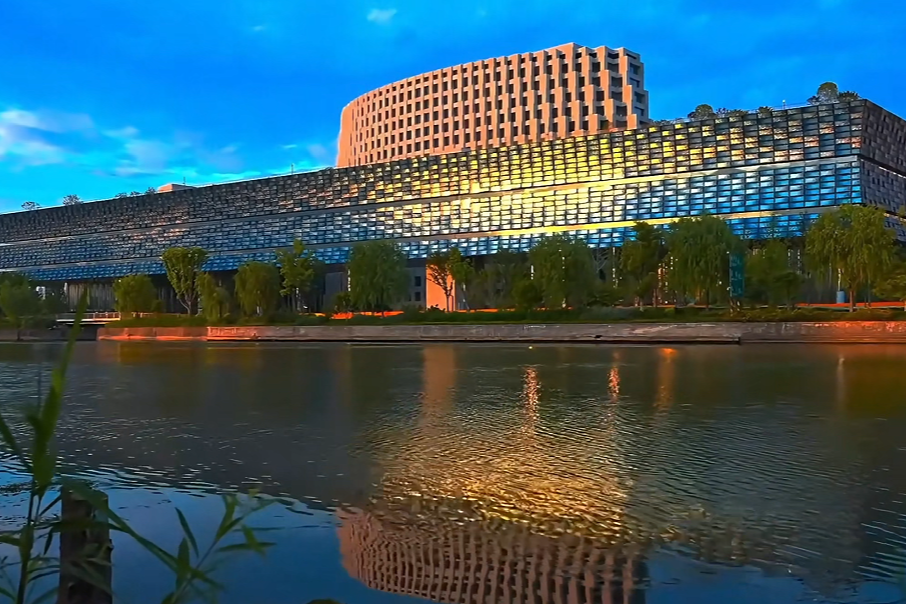
Located along the Hangzhou section of the Beijing-Hangzhou Grand Canal, a UNESCO World Cultural Heritage site, the project has a total floor area of approximately 175,600 square meters. It will serve as a national-level museum dedicated to the Grand Canal and an international platform for exchanges in the Grand Canal culture, helping preserve and promote the Grand Canal heritage.
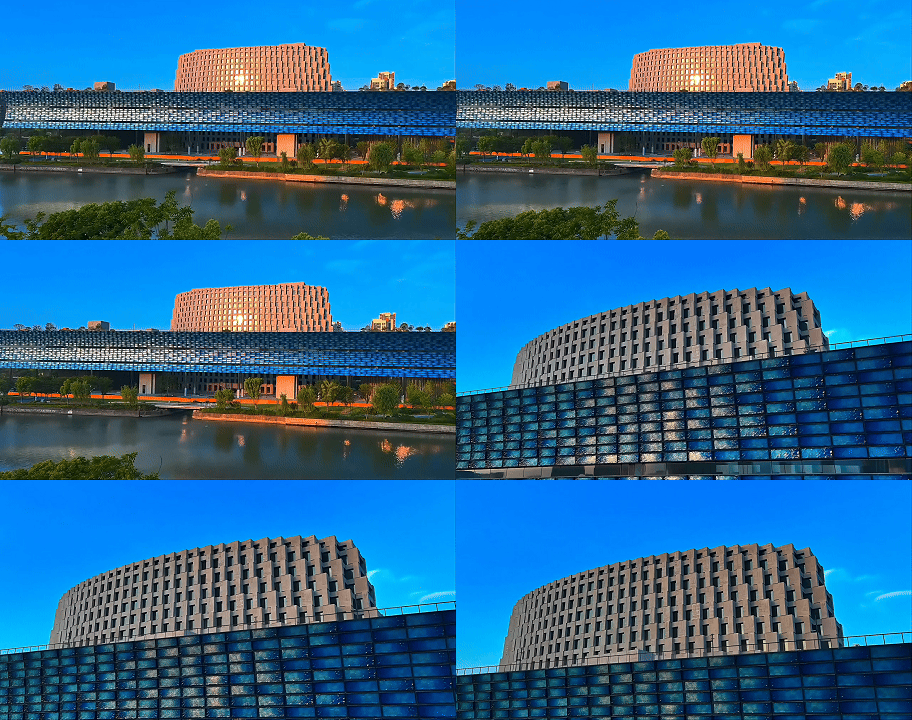
Designed by Herzog & de Meuron, the museum appears to float above the canal. Clad in shades of blue, its main structure is elevated 13.15 meters above ground level, creating a distinctive presence along the waterfront.
One of the building's defining features is its blue glazed curtain wall, composed of 7,240 glazed panels covering a total area of 17,800 square meters. It is the first application of glazed materials on such a scale in a modern large public building. The gradient "canal blue" façade reflects the colors of the water below, extending along the riverfront like a flowing ribbon and creating a visual dialogue with the historic canal.
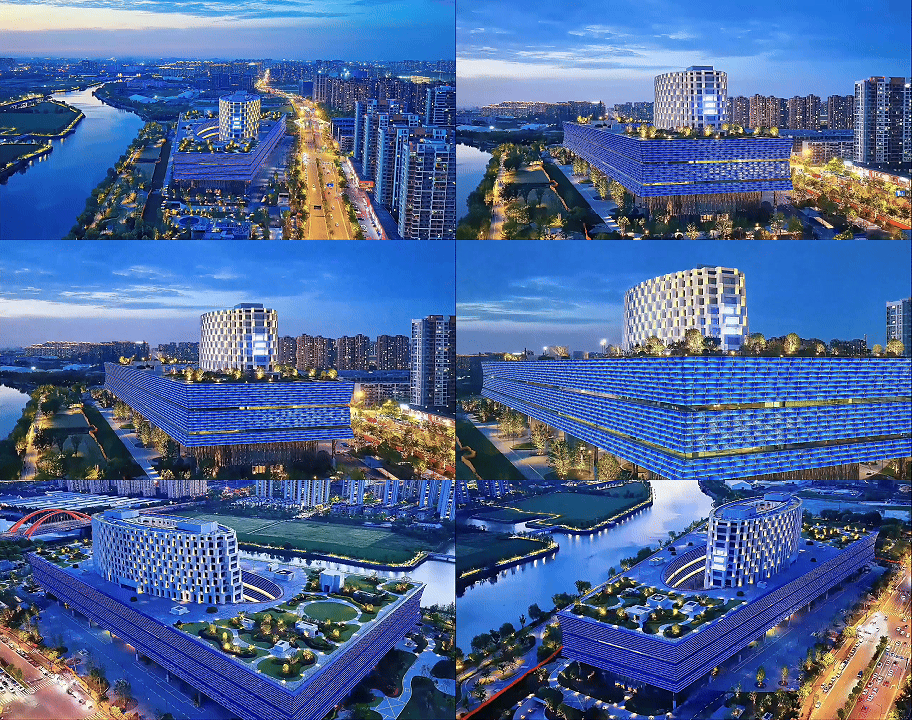
To realize the building's signature suspended form, the entire structure — weighing 28,000 tonnes of steel — is supported by just five concrete cores and a number of steel columns. The project team developed innovative construction techniques to ensure structural stability.
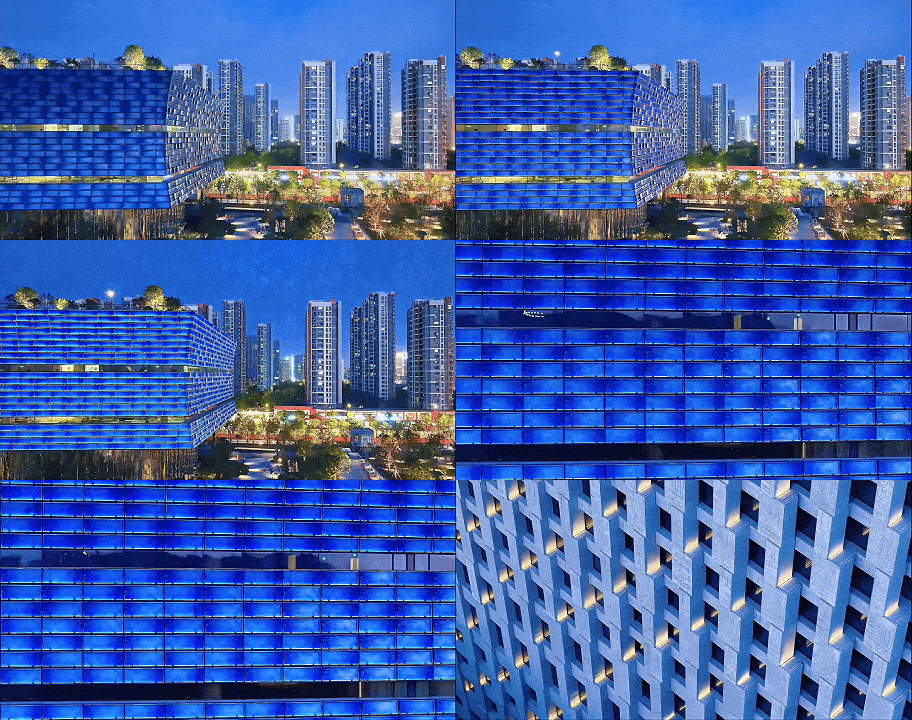
Fair-faced concrete was used extensively for the project. Through optimized concrete mix designs and precise construction management, the team achieved a fair-faced concrete finish with uniform color and smooth, clean lines across large surfaces.
The building's elevated design creates a public plaza beneath the structure at ground level, while rooftop walkways and a sky garden provide residents and visitors with spaces to experience the Grand Canal culture alongside the rhythms of modern urban life.


Site Map | Legal Statement | FAQ | Contact Us
©2017-2020 CSCEC ICP 05049820 CSCEC . LTD ICP 08010180



