Recently, two CSCEC affordable housing projects in Shenzhen won the Green Project Management Best Practice award at the third Gephson Awards ceremony in Chengdu, China.
The awards ceremony was organized by the American Association of Project Management (AAPM). Both projects feature modular integrated construction (MiC) technology: Huazhang Xinzhu and Anju Jingxinyuan.


The Gephson Awards aims to identify global best practices in green project management through an independent, objective and international evaluation system. Judges assess entries based on four criteria: innovation, practicality, scalability and integration of environmental, social and governance (ESG) principles. This year, 67 projects won awards.
Huazhang Xinzhu: China's first modular building with full life-cycle digital delivery through building information modeling (BIM)
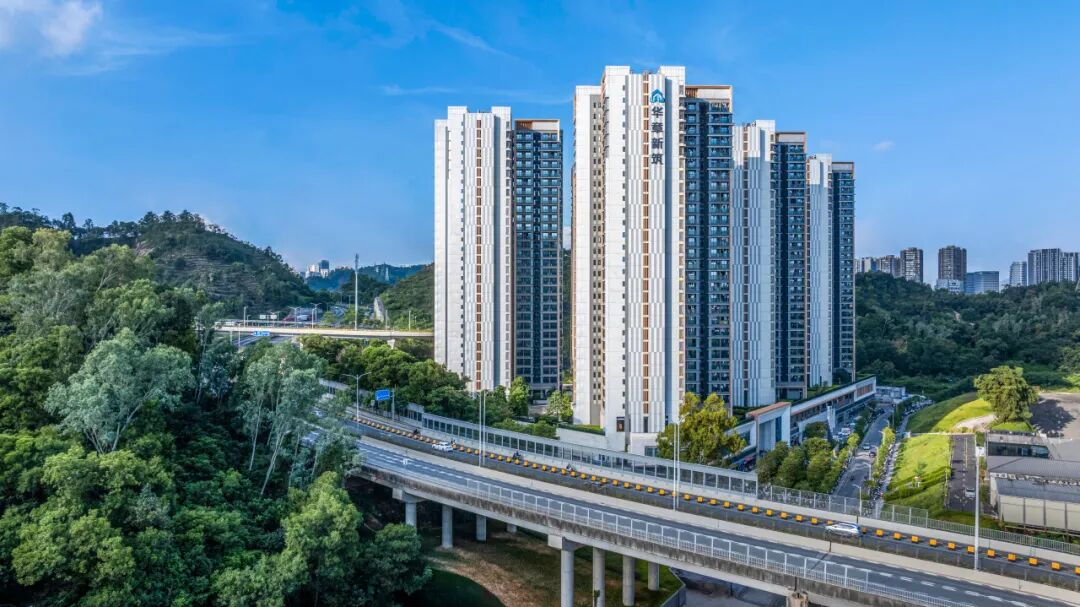
Located in Shenzhen's Longhua District, Huazhang Xinzhu has a gross floor area of 173,600 square meters and comprises two 29-story residential towers and three 28-story towers. The project provides 2,740 affordable rental apartments.
Using MiC technology, the team divided the five towers, each nearly 100 meters tall, into 6,028 modules. More than 70 percent of the work was completed in factories. The project was completed in just one year, reducing construction time by more than 60 percent compared with traditional methods.
Anju Jingxinyuan: China's first concrete modular high-rise in a dense urban area

Located in Shenzhen's Futian District, Anju Jingxinyuan has a gross floor area of 44,500 square meters, with two underground floors and 30 above-ground floors. The building provides 696 affordable rental apartments.
The team divided the building into 800 functional modules, with more than 90 percent of the work completed in factories. From the lifting of the first module to the completion of interior finishing and the building's topping out, the project took just 148 days—14 months less than traditional construction would have required.
MiC is a green construction technology that shifts much of the construction work from the site to the factory. It improves efficiency and reduces carbon emissions. Compared with conventional methods, it reduces construction waste by more than 75 percent and material waste by more than 25 percent. It also reduces carbon emissions during construction by about 4,190 metric tons. In addition, it minimizes disruption to nearby residents and traffic.


Site Map | Legal Statement | FAQ | Contact Us
©2017-2020 CSCEC ICP 05049820 CSCEC . LTD ICP 08010180



