Five projects designed by CSCEC have received honors at the 2025 Architecture MasterPrize (AMP), with two projects winning the highest distinction, the Architectural Design Award – Best of Best, and three projects receiving Winner awards in their respective categories.
Best of Best Winner in Recreational Architecture—Qingdao Youth Football Stadium
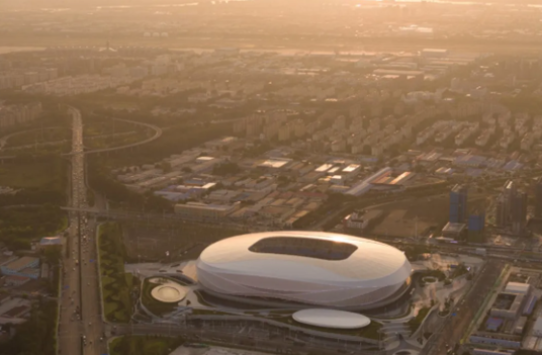
Qingdao Youth Football Stadium, the first large-scale professional football stadium in Shandong Province, has a site area of 163,000 square meters and a total gross floor area of 194,000 square meters. The complex includes a 50,000-seat professional football stadium, a multi-functional training hall, a swimming training center and supporting commercial facilities.
Designed under the concept of the "jumping" sea waves, the stadium reflects the city's coastal identity. Since its completion in April 2023, the stadium has hosted major domestic and international football events while supporting public fitness and youth training programs, contributing to Qingdao's urban profile and development.
Best of Best in Transportation—Terminal 3B of Chongqing Jiangbei International Airport
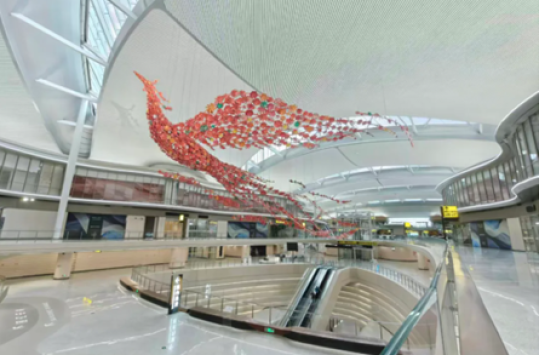
Terminal 3B of Chongqing Jiangbei International Airport serves as a satellite hall to Terminal 3A, providing departure and arrival services for up to 35 million domestic passengers annually.
The terminal adopts an X-shaped layout designed to optimize gate efficiency, reduce passenger walking distances and improve airside operations. Inspired by imagery of “soaring wings and rippling water,” the architectural form reflects Chongqing's mountainous and riverine landscape.
The project incorporates technologies such as 3D printing, thermochromic glass and a supercapacitor-powered monorail system, showcasing local characteristics and innovative vitality within its modern facilities.
Winner in Industrial Buildings—Chengdu Supercomputing Center
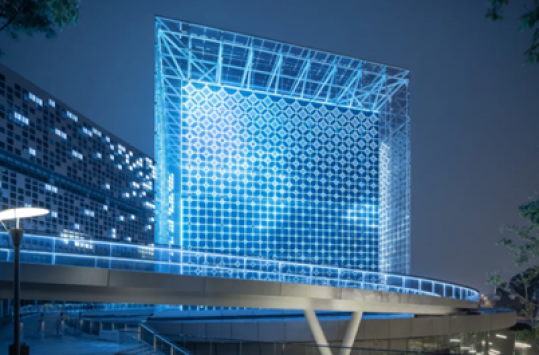
The Chengdu Supercomputing Center, with a computing power of 100 petaflops per second, ranks among the world's leading facilities. The design reinterprets the conventional closed form of supercomputing centers, creating an accessible urban landmark. At its core is an 8,000-cubic-meter “silicon cube” housing modular data rooms. Its façade features gradient deep-blue aluminum panels and translucent white panels, producing dynamic lighting effects throughout the day and night.
An elevated public walkway traverses the building, integrating the facility with surrounding urban spaces and transforming it into a venue for science outreach and public engagement.
Winner in Educational Buildings—Service Center of Chengdu Universiade Village for 31st Summer Universiade
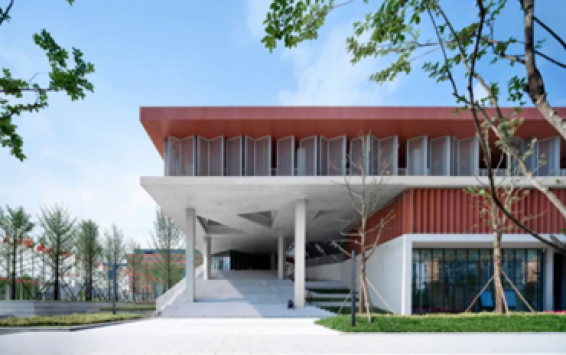
The service center features a horizontal structural system built with exposed concrete slabs. Modular volumes are inserted between layered structural planes to form flexible functional spaces.
The design emphasizes passive energy-saving strategies. A flared spatial section that widens at both ends and narrows at the center enhances airflow and natural ventilation, allowing the atrium to maintain thermal comfort without mechanical cooling. Annual electricity savings are estimated at 70,000 kilowatt-hours.
After serving the Summer Universiade, the facility has transitioned into daily campus use, reducing reliance on air conditioning and supporting long-term energy efficiency.
Winner in Infrastructure—Yantai Penglai International Airport Terminal 2
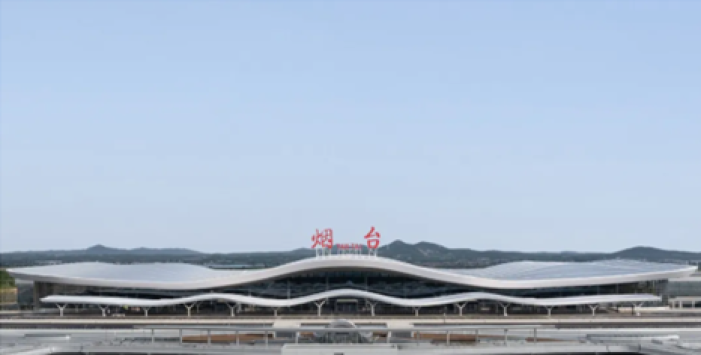
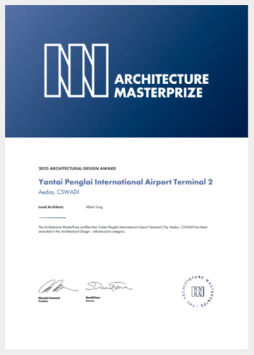
The Terminal 2 at Yantai Penglai International Airport is designed to handle 23 million passengers annually by 2030. The new terminal has a floor area of approximately 174,000 square meters and is classified as a 4E-level airport facility.
Inspired by the theme "Sacred coastal landscape, mountain in the clouds," the architecture reflects Yantai's maritime and mountainous character. The main roof undulates like cloud-wrapped peaks, while the airside configuration echoes the curves of the coastline.
The project adopts a dual-bay layout parallel to the runway and integrates multi-modal transportation, including metro and private vehicle access. The transport center reserves check-in functions to enable seamless air-rail connectivity and minimize passenger transfers.


Site Map | Legal Statement | FAQ | Contact Us
©2017-2020 CSCEC ICP 05049820 CSCEC . LTD ICP 08010180



