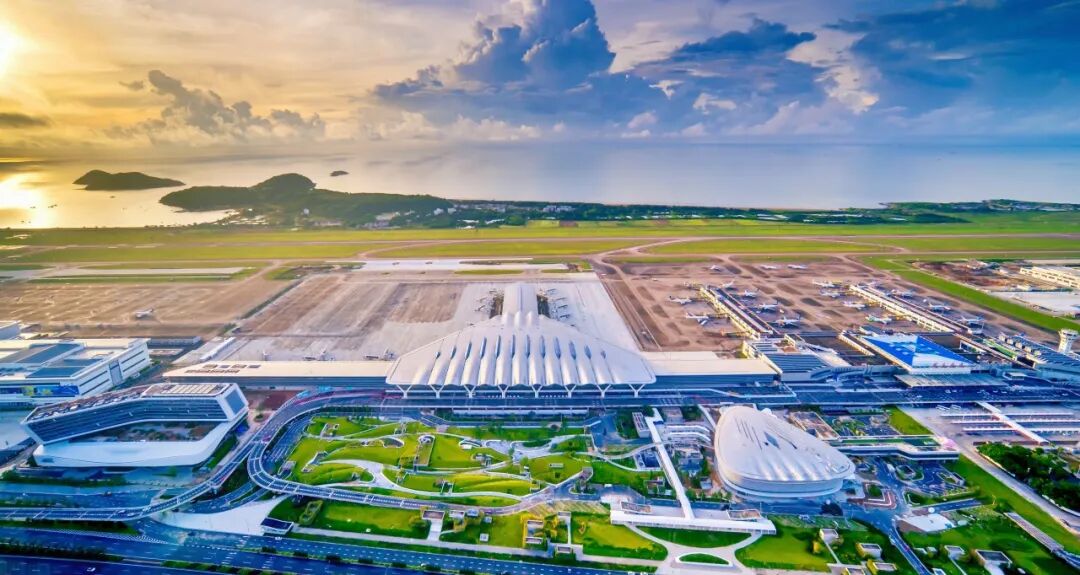
CSCEC recently completed the reconstruction and expansion project of Zhuhai Airport in Zhuhai city, Guangdong Province.
The project covers a total floor area of 197,000 square meters, centered on the construction of the Terminal 2. Once operational, it will substantially boost the airport's overall capacity and service quality, improve the province's integrated transport network, and facilitate smoother flow of people and goods among Hong Kong, Zhuhai and Macao.
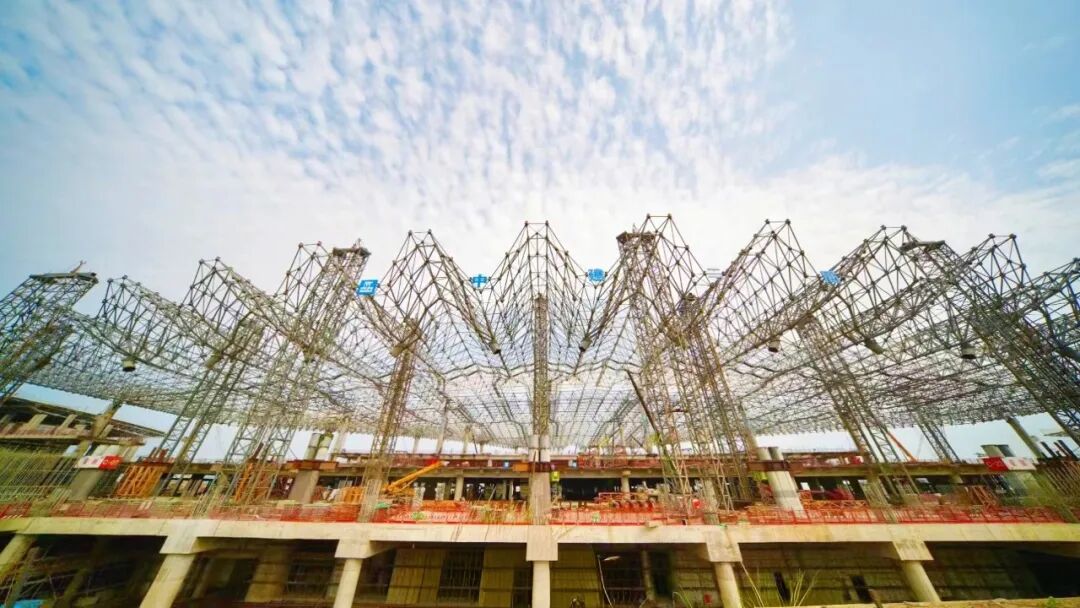
The Terminal 2 roof features a steel grid structure spanning more than 65,000 square meters and weighing about 6,120 tonnes. The project team developed a proprietary construction method for large-span, variable-curvature hyperbolic grid structures. Components were modeled using Building Information Modeling (BIM) software and pre-assembled on the ground.
During the lifting phase, engineers applied a segmental lifting technique, raising the structure at a rate of four meters per hour while continuously adjusting its angle and direction. The result was millimeter-level precision in high-altitude alignment — a technical achievement that was subsequently assessed as meeting internationally advanced standards.
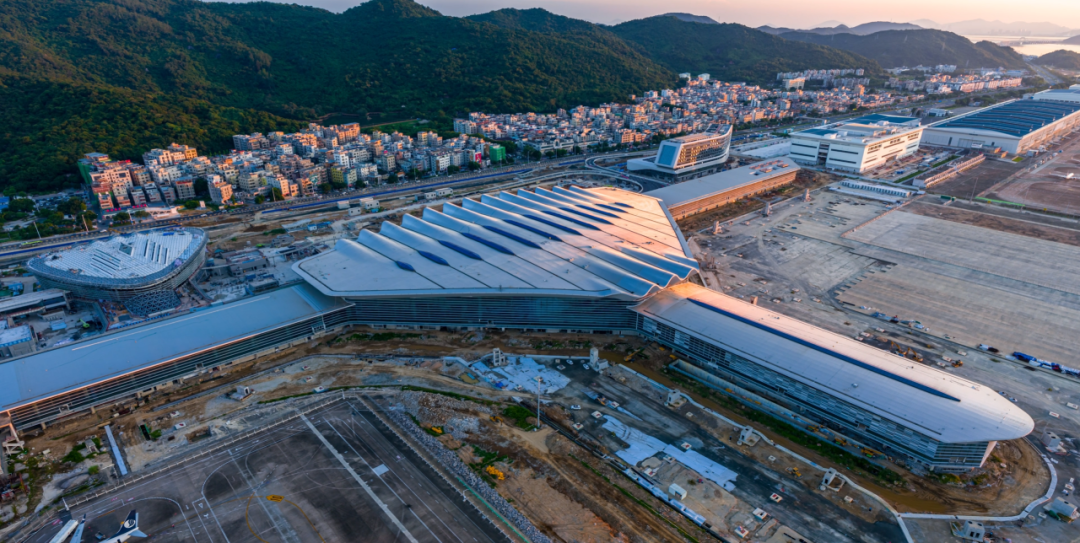
The Terminal 2 roof itself takes the form of a variable-curvature hyperbolic wave that stretches more than 300 meters from east to west, with wave crests spaced 18 meters apart and a maximum height difference of eight meters between peaks and troughs. The team developed an embedded, continuous-welding stainless steel roofing system that significantly improves the roof's resistance to wind uplift, water infiltration and corrosion, while ensuring the structural integrity of the metal roof as a whole.
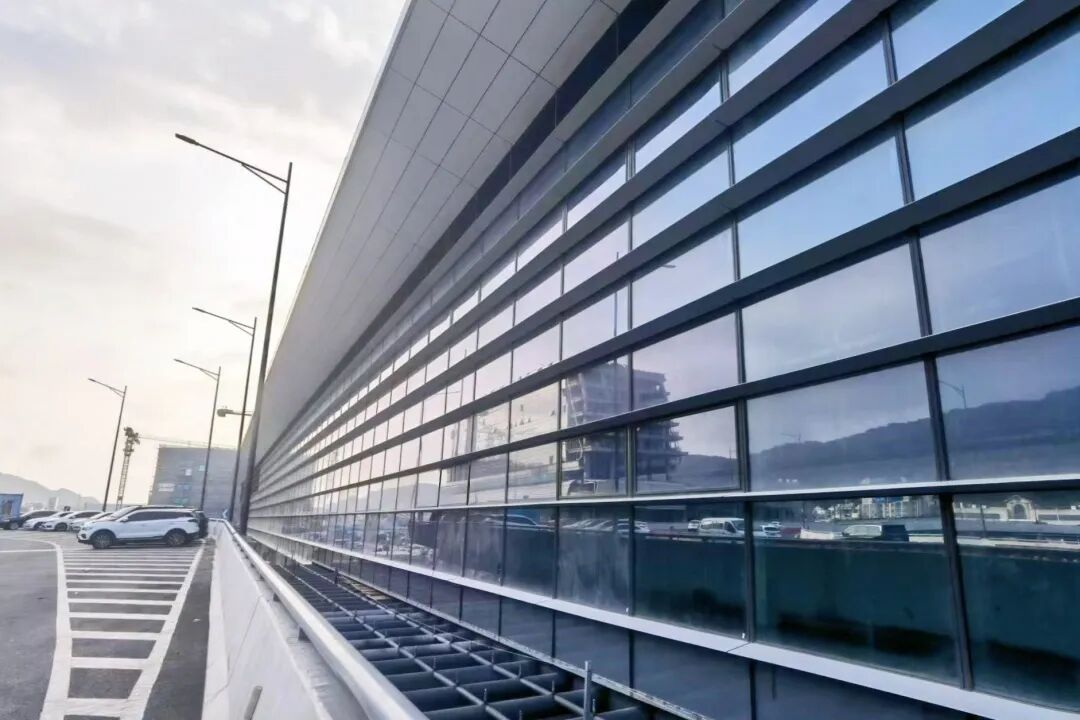
The Terminal 2's curtain wall, covering a total area of 54,000 square meters, presented its own challenges. Individual glass panels measure up to three meters long and two meters high, and the north-facing facade follows the same multi-curvature wave profile, making it vulnerable to wind uplift, leakage and deformation. The team addressed this with a suspended-frame, high-wind-resistance curtain wall system, adding vertical stainless steel tie rods at steel columns and trusses throughout. Acting like flexible joints, the rods allow the facade to flex under strong wind loads without compromising its integrity.


Site Map | Legal Statement | FAQ | Contact Us
©2017-2020 CSCEC ICP 05049820 CSCEC . LTD ICP 08010180



