Smart construction brings about green development. Recently, the construction project of CSCEC conducted a light and water show test at the Dongjiao Lake in Qingyang, Gansu province, presenting a magnificent visual feast.
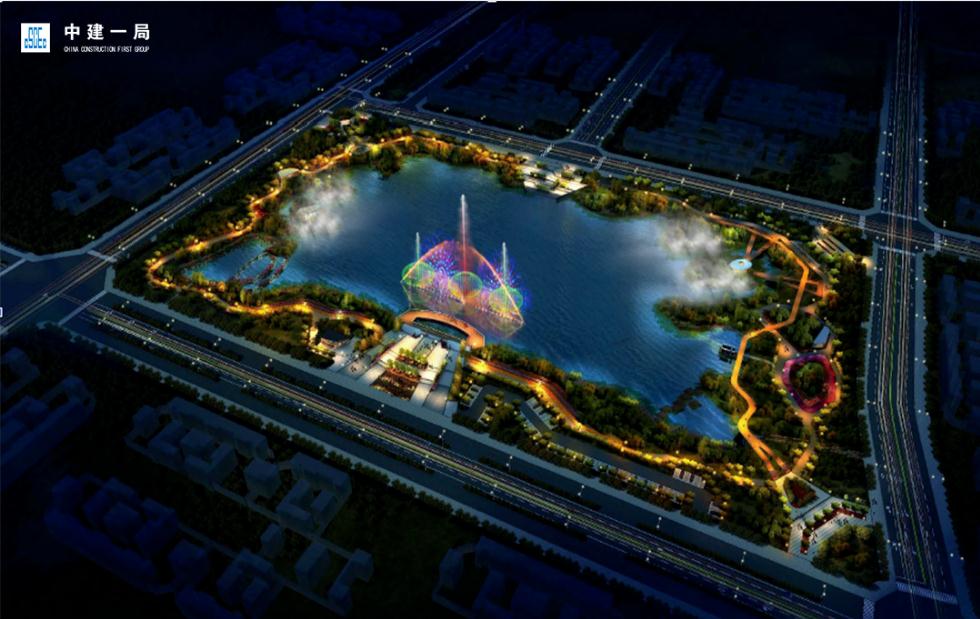
The project is located in the world's deepest loess layer. In the construction, CSCEC adopts the methods such as source reduction, midway storage and terminal treatment to realize water conservation and soil conservation.
Sponge city, a concept of managing rainfall flood in the new cities, refers to cities' good resilience in adapting to environmental changes and coping with natural disasters caused by rain. It can also be called "water resilient city".
After field exploration and collection of geological and hydrological data, CSCEC adopted pipe jacking technology, built new urban rainwater pipelines, and established grass ditches to realize water storage, collection and recycling through repeated discussion and scientific demonstration. This project also uses permeable concrete, permeable bricks and other sponge materials for road construction to achieve emission reduction.
In the process of project construction, the project team of CSCEC strives to retain the original ecological landform, build an urban rainwater system with rainwater infiltration, storage, regulation, transfer, sewage interception and purification functions to improve rainwater storage and retention capacity, achieving the construction goals of rainwater collection, recycling and reuse.
At the end of urban drainage, the slope protection system combining engineering measures and biological measures was formed by slope renovation, soil and water conservation to shelter forests and grass and other means. Vegetation restoration, soil consolidation and erosion prevention achieved the absorption and utilization of 90% rainfall, promoting the ecological sustainable development.


Site Map | Legal Statement | FAQ | Contact Us
©2017-2020 CSCEC ICP 05049820 CSCEC . LTD ICP 08010180



